It's June 17 -- Father's Day. I'm working Urgent Care Pediatrics.
On a day to celebrate fathers, I sure saw a lot of them. Worried, broad shouldered, holding their little ones in jammies, blankets or in infant car seats, they brought their little ones in. I walked into one room to find the baby in the car seat fast asleep and the dad sitting on a stool with his head resting on the table, also fast asleep. He wearily recounted a difficult night of sitting up with a fussy, coughing baby.
Here's where the rubber meets the road. Fathers caring for their children, no thanks needed. Selflessly, they did their duty as parents and dads. When I casually remarked to one dad of a 4 month old,
"Hey! Congratulations! It's your first father's day!" (This was his first child).
He looked at me puzzled for a moment and then broke a smile and said thanks. He wasn't thinking of Father's Day, or presents, or a special day for him. He only wanted his little boy to be better.
In a world that has its share of deadbeat dads, irresponsible, selfish and childish men who father children nonetheless, it was great to see that there are still caring, tenderhearted, broadshouldered men out there who are doing their jobs... even on Father's Day.
Sunday, June 17, 2012


Happy Birthday to You!
Working Urgent Care Peds on the weekends is lots of fun. Oh sure, some days you're so busy you don't know if you're coming or going. Yesterday was one of those days. The place was hopping! Imagine my surprise when another 8 patients appeared in my list of patients to see. Curiously, they all belonged to 2 families. Hmmm...
My colleague on the adult side was seeing a couple of adults there too, in relation to the same thing.
Here's the story. Dad had a birthday (yay!). A cake was ordered. The cake was cut, Happy Birthday was sung. Good times for all. While Mom was cleaning up, she began to wash the knife. Imagine her surprise when she noticed that a piece of the knife blade was missing. It was as if an arc-shaped piece from the cutting edge of the knife had dissappeared. She could swear that the knife was entire this morning when she put the knife in her husband's hand. Oh-oh!
The family all rushed to Urgent Care. Was the knife piece in someone's belly -- someone who had eaten the cake? Thoughtfully, they brought the cake along as well. Half of it had been eaten of course and the other half had been cut into slices, but it was still in its glass baking dish.
While we were all contemplating having to x-ray all these adults and children to look for a metallic piece in their gastrointestinal system, our radiologist had the presence of mind to save the situation. He would x-ray the remaining birthday cake. If the piece was not there, then the whole lot of them would be walked through a fluoroscopic (live-action x-ray) machine to look to see where the knife piece was.
Fortunately, the knife-piece in its enterity was discovered in the cake. It showed up beautiful on x-ray. I must say that I think this is the first time I have heard of x-raying a birthday cake but hey, anything's possible.
We did not have to x-ray anybody.
At the end of it all, we were left with one problem (By the way, the family took the cake home). In this day of electronic medical records and billing, how do we record the x-ray? Our drop-down menus all had anatomy locations to choose from (chest, abdomen, thorax, upper and lower extremities, etc). Cake was not among them.
Some problems we can live with.
My colleague on the adult side was seeing a couple of adults there too, in relation to the same thing.
Here's the story. Dad had a birthday (yay!). A cake was ordered. The cake was cut, Happy Birthday was sung. Good times for all. While Mom was cleaning up, she began to wash the knife. Imagine her surprise when she noticed that a piece of the knife blade was missing. It was as if an arc-shaped piece from the cutting edge of the knife had dissappeared. She could swear that the knife was entire this morning when she put the knife in her husband's hand. Oh-oh!
The family all rushed to Urgent Care. Was the knife piece in someone's belly -- someone who had eaten the cake? Thoughtfully, they brought the cake along as well. Half of it had been eaten of course and the other half had been cut into slices, but it was still in its glass baking dish.
While we were all contemplating having to x-ray all these adults and children to look for a metallic piece in their gastrointestinal system, our radiologist had the presence of mind to save the situation. He would x-ray the remaining birthday cake. If the piece was not there, then the whole lot of them would be walked through a fluoroscopic (live-action x-ray) machine to look to see where the knife piece was.
Fortunately, the knife-piece in its enterity was discovered in the cake. It showed up beautiful on x-ray. I must say that I think this is the first time I have heard of x-raying a birthday cake but hey, anything's possible.
We did not have to x-ray anybody.
At the end of it all, we were left with one problem (By the way, the family took the cake home). In this day of electronic medical records and billing, how do we record the x-ray? Our drop-down menus all had anatomy locations to choose from (chest, abdomen, thorax, upper and lower extremities, etc). Cake was not among them.
Some problems we can live with.
Sunday, March 25, 2012
In Memory of Harry

Harry W. Kuse (1922 - 2012)
It's a Sunday evening. I have a new (to me) patient with cystic fibrosis on the floor. I was not supposed to work this evening, but whenever a cystic fibrosis comes in, plans change and I round on them daily. As I finished doing that (circa. 7:30 pm), I thought to go and see my patient and friend, Harry. Up until Friday, we had been trying to treat him and he was not responding. The plan was to transfer him to palliative care's service by Monday if he did not turn around. I looked up his name on the computer and found that he had already been transferred to their service. Things must have taken a turn for the worse, I thought. I walked down to the unit to see him and his family -- a doting daughter-in-law and son. The bed was wiped clean. Harry was dead. He died around 5:30 pm today.I first met Harry way back when I was still doing residency training. I still remember entering the exam room to find this pleasant elderly gentleman reading a western novel without any reading glasses. Through the years I came to know Harry well. He probably read every western novel he could get his hands on. Towards the end, the only westerns he could find that he had not read were western romances so he began reading those too.
Harry had become quite deaf but absolutely refused to wear hearing aids. We communicated with him by writing things on a whiteboard and he would reply back verbally. In the beginning, his daughter-in-law had to 'translate' everything he said to me because I could not make out the words in his near mumbling, rumbling voice. Towards the end however, I was surprised to realize one day that I no longer needed her help. I understood him well enough.
Harry was a tough old guy. He would flirt with the nurses and aids at the nursing home and hospital and had a great sense of humor. In the last 3 weeks he took a turn for the worse and began a slow decline that failed to change despite antibiotics, breathing treatments or whatever we did. We began to see this coming.
I remember walking away from the hospital last Sunday reflecting that for the first time, perhaps, I was losing my clinical objectivity with respect to a patient. I did NOT want him to die! I was not ready for comfort measures and found myself suggesting to his hospital doctors that we try this or that treatment. They looked at me sympathetically, but puzzled and a little dissappointed. I was supposed to be on their side in telling the family that it was time to let Harry go and I wasn't helping. It gave me pause. When does a patient become a family member or a close friend so much so that clinical objectivity is lost? Can I truly do right by my patient if I become emotional towards the inevitable decline?
On Friday, I saw Harry for the last time. He would open his eyes when I called his name but close them seconds later. I confessed my struggle with objectivity to the family with a trembling voice. However, I did put my heart aside for the moment and told them that I thought Harry had fought long and hard and his body was giving up. It was time to stop the treatments that weren't helping and keep him comfortable. They agreed. His daughter-in-law had in fact already begun to assemble photos of Harry in a slideshow and shared some of them with me. We all shed tears as we smiled at Harry's mischievious smile and twinkle in his eye as he rode his little tractor in their garden, as he played with grandkids, and wore a valentine heart on his last valentine day. I was paged out of the room and had to rush away. That was the last time I saw Harry.
They say you're not supposed to get attached to your patients. How is that possible after taking care of them for years and going through thick and thin, near misses with death and some emotionally charged painful experiences together? Sometimes all even a doctor can do is shed tears and bid farewell to a patient who becomes a friend.
Goodbye Harry! I will miss you! I still got your kids to take care of. Know that they are in loving hands.
Saturday, March 03, 2012
Tension in the room
It was the last patient of the day. Why is it always the last patient of the day?
It was a well child exam of a beautiful toddler. She was in the room with both of her parents. She saw me enter and smiled. Mom gave her a photo to hand to me. It was a picture of her all dressed up looking so-oo big. I smiled and thanked her, giving her a hug.
In the room were mom and dad. When they looked at her or talked to her or to me about her, they beamed. Their eyes lit up as they proudly recited all the words she could say and the new things she was doing. They did not have any concerns. But...
When they looked at each other or exchanged a few words, the tension could be cut with a knife. I knew they were divorced. I knew they shared custody. They obviously loved their daughter. They showed their committment to her by both coming to the appointment -- or did they not trust each other to relay anything that may transpire at the doctor's to each other?
Divorce is such a sad part of our society. With more than half marriages ending in divorce, there are many children in shared custody. Most parents love their children even if they can no longer share a marriage with their child's parent. I hurt for the parents and the children in this situation. As a doctor who sees children, interacting with the adult parents is part of the equation. As a doctor to adults too, I feel the pain of both the parent and the child and want to help them both. But how?
I have seen this child since she was born. Her parents were married then and not now. I will continue to walk with her and with them doing what I can for all of them. One day, one visit, one situation at a time.
It was a well child exam of a beautiful toddler. She was in the room with both of her parents. She saw me enter and smiled. Mom gave her a photo to hand to me. It was a picture of her all dressed up looking so-oo big. I smiled and thanked her, giving her a hug.
In the room were mom and dad. When they looked at her or talked to her or to me about her, they beamed. Their eyes lit up as they proudly recited all the words she could say and the new things she was doing. They did not have any concerns. But...
When they looked at each other or exchanged a few words, the tension could be cut with a knife. I knew they were divorced. I knew they shared custody. They obviously loved their daughter. They showed their committment to her by both coming to the appointment -- or did they not trust each other to relay anything that may transpire at the doctor's to each other?
Divorce is such a sad part of our society. With more than half marriages ending in divorce, there are many children in shared custody. Most parents love their children even if they can no longer share a marriage with their child's parent. I hurt for the parents and the children in this situation. As a doctor who sees children, interacting with the adult parents is part of the equation. As a doctor to adults too, I feel the pain of both the parent and the child and want to help them both. But how?
I have seen this child since she was born. Her parents were married then and not now. I will continue to walk with her and with them doing what I can for all of them. One day, one visit, one situation at a time.
El Salvador Mission Trip 2012 - Part 1
From January 20 to 29, 2012, a group of 56 people, including 4 doctors, 1 dentist, 7 nurses and others travelled from Marshfield, WI to El Salvador to work, pray, love, repair and build. In 4 days, we visited 4 different underserved sites in the country and delivered medical care to 800 people. Here are some pictures from that trip.
To get to some destinations, it was necessary to transfer everything to smaller pickup trucks.
We had a lot of fun and I think, got back more than we gave. Here is one of our high school volunteers (Olivia Heegeman) teaching a little girl how to blow bubbles.
It worked! Laughter is free.
One of doctors -- Princy Ghera-- was a Med-Peds resident from our (Marshfield Clinic's) combined residency program in internal medicine and pediatrics. She finishes her residency this June and is going on to become a pediatric pulmonologist. Here she is removing an infected ingrown toenail while I looked on.
 |
| On medical missions, if you'll need it, take it with you! |
Every morning, we'd have breakfast at 6:30 am. About an hour later, we would load our two buses with people and equipment. Pretty tight fit! Most of our trips involved 2 to 4 hours of bus travel each way to the places we worked at.
To get to some destinations, it was necessary to transfer everything to smaller pickup trucks.
 |
| Sometimes, the roads were too narrow for a bus, so we'd transfer everything to small pickup trucks and go the rest of the way |
 |
| Let's make bubbles! |
We had a lot of fun and I think, got back more than we gave. Here is one of our high school volunteers (Olivia Heegeman) teaching a little girl how to blow bubbles.
 |
| Blowing bubbles is fun! |
It worked! Laughter is free.
 |
| removing an infected ingrown toenail |
 |
| Here's the patient (mom) holding onto her daughte for comfort. |
Interestingly, while she worked on the patient's toe, the patient, a mom, held tightly onto her daughter, while the second one looked curiously at me trying to comfort her. Usually mothers comfort their children during medical procedures. But who says the roles cannot be reversed?
Our team purposely went to the poorer parts of the country. Our goal was to provide free medical care and services to those without access.
 |
Some of the houses nearby where we worked |
El Salvador Mission Trip 2012 - Part 2
 |
| Counting pills |
In the background you can see our evangelism team learning street skits and dances they used to reach people on the streets while we saw patients.
 |
| Are they any more left? |
 |
| on the road |
|
| Onto a smaller pickup where our bus could not go |
For me personally, it was fun to load the bus, then unload the bus and load the pickup truck, then unload the pickup truck and set up everything in the places we provided care. We all worked hard to do this. It was good exercise.
 |
| Setting up |
 |
| Dr. Boris Magana 'checking in' a patient. |
 |
| Checking blood sugars |
 |
| Checking vitals |
Nurses wrote the vitals onto the patient's 'char' (a single sheet given out at the triage station above).
 |
| Getting busy |
 |
| Zip (Fran Davis) with a couple of fans |
 |
| A family waiting to be seen |
El Salvador Mission Trip 2012 - Part 3 -- Seeing the doctor and dentist
Once processed, patients take their seats in a waiting area and are seen by a doctor and/or dentist. If referred, they are sent to a station to get their ears flushed, get an injection, get sunglasses or get their teeth varnished (for the kids).
Seeing a patient in El Salvador in a medical missions environment is different than seeing them in the office in the States. It is noisy, busy and there is little or no privacy. There is no exam table. Most patients give their history using terms that would mystify most internists. If you ask them "How can I help you?" they look at you confused and say "I don't need any help!" In El Salvador, doctors ask "Que tiene?" -- What d'you have? That magic phrase gets them talking and interestingly, they all begin with "Fijarse doctor, es que tengo..." (Focus on this doctor, it's that I have...). They used expressions like "tengo nervios" (literally, I have nerves or nervousness), "Mis ojos arden" (my eyes burn) or "me duele mis canas". Through the years, we have figured out that there is a lot of dehydration, dry eyes, fatigue, and perhaps parasite-related complaints.
More scary though was that they would use medical terms in their description of symptoms like "cuando tengo cholera..." (when I have cholera...) or "tengo mucho parasitos (I have a lot of parasites...) or "siento mucho malaria" (feel malaria). This can be quite bewildering in the beginning.
One learns to adapt and ask different questions until one is satisfied that one has a story that makes sense.
Dr. Boris and myself are talking to Oscar and his mother about what to do for him after I debrided necrotic stage 3 pressure ulcers.
Our dentist Rick Mueller has come with us every year. He brings along a portable dentists chair and a pump compressor unit for suction and a whole slew of instruments. Assisting him here is Amy Neumann who is actually a violinist and information technology specialist, but she learned on the job quickly enough.
 |
| towards the end of the day, there were few patients left to see |
Seeing a patient in El Salvador in a medical missions environment is different than seeing them in the office in the States. It is noisy, busy and there is little or no privacy. There is no exam table. Most patients give their history using terms that would mystify most internists. If you ask them "How can I help you?" they look at you confused and say "I don't need any help!" In El Salvador, doctors ask "Que tiene?" -- What d'you have? That magic phrase gets them talking and interestingly, they all begin with "Fijarse doctor, es que tengo..." (Focus on this doctor, it's that I have...). They used expressions like "tengo nervios" (literally, I have nerves or nervousness), "Mis ojos arden" (my eyes burn) or "me duele mis canas". Through the years, we have figured out that there is a lot of dehydration, dry eyes, fatigue, and perhaps parasite-related complaints.
 |
| Getting a history -- the key to a diagnosis |
 |
| Dr. Dave Heegeman seeing a patient |
More scary though was that they would use medical terms in their description of symptoms like "cuando tengo cholera..." (when I have cholera...) or "tengo mucho parasitos (I have a lot of parasites...) or "siento mucho malaria" (feel malaria). This can be quite bewildering in the beginning.
 |
| Dr. Thao Trinh, a pediatrician seeing a patient |
 |
| Dr. Princy Ghera checks a thyroid |
 |
| Thinking it through -- the internist's job |
 |
| What are we going to do next? |
 |
| Rick Mueller (our dentist) and Amy Neumann assisting |
El Salvador Mission Trip 2012 - Part 4 -- Eye problems
 |
| Eye damage from a chemical spill |
 |
| Nevus in eye |
 |
| Another Nevus in the eye |
 |
| bilateral pterygia |
 |
| pterygium in left eye |
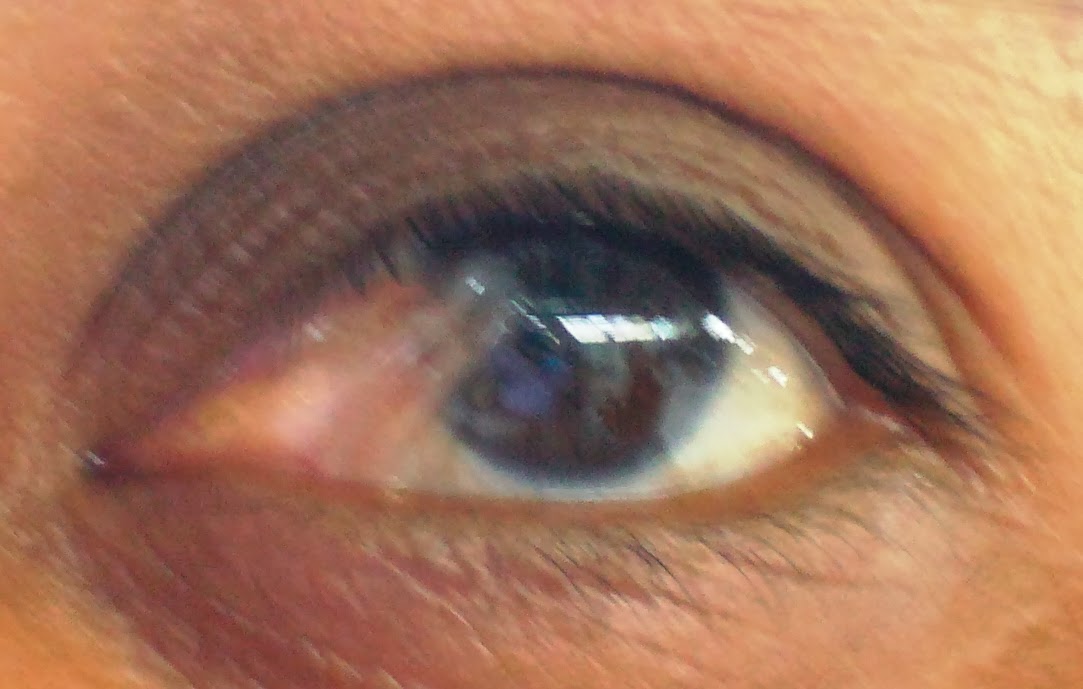 |
| spreading pterygium |
 |
| pterygium in left eye |
 |
| cataract in right eye in a 90-something year old |
El Salvador Mission Trip 2012 - Part 5 -- Assorted medical problems
 |
| Fingernail clubbing |
 |
| Ear pits |
 |
| Flat wart |
 |
| Gum abscess |
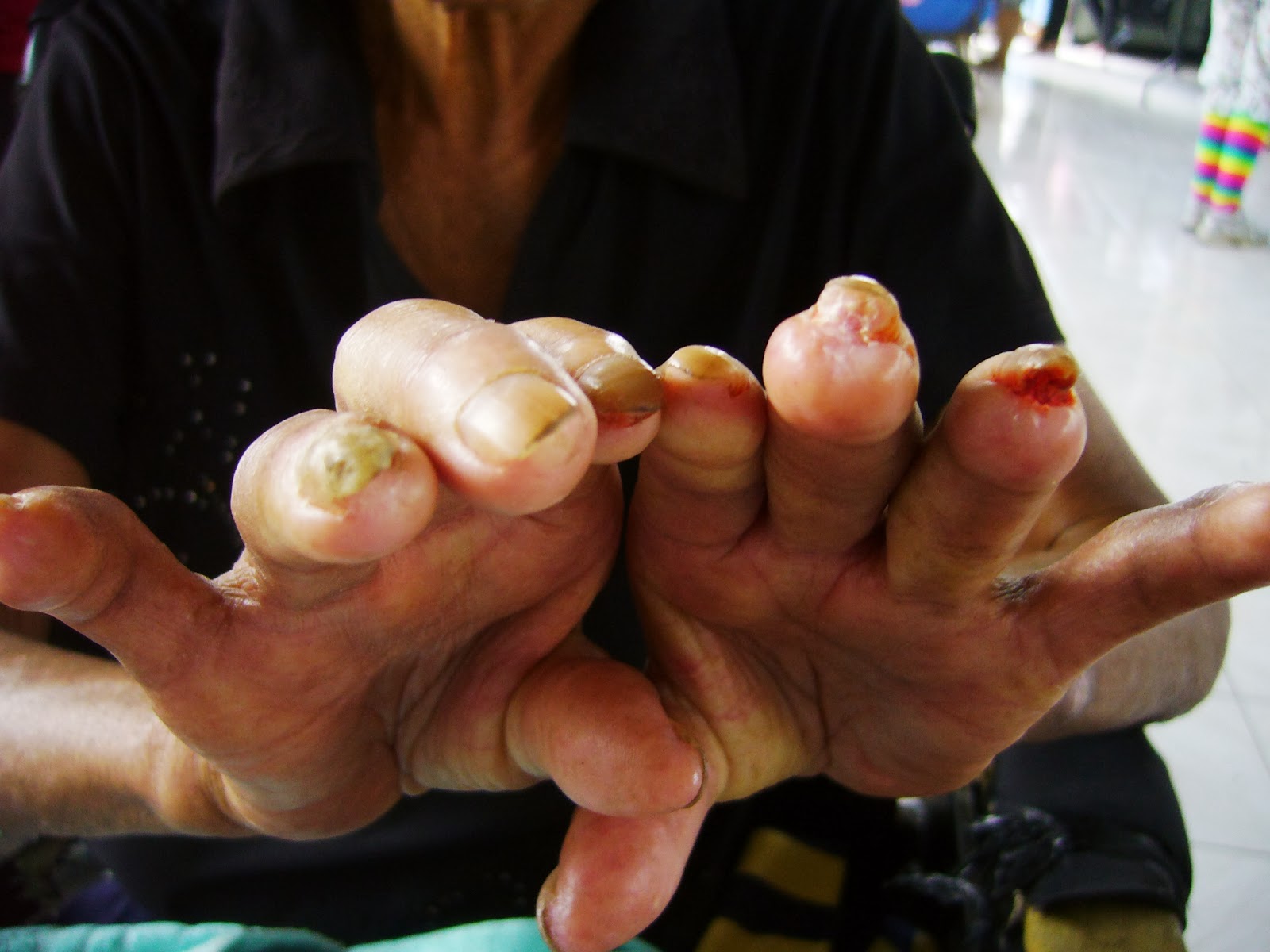 |
| Lichen planus |
 |
| psoriatic patch on elbow |
 |
| psoriatic patch on dorsum of foot |
 |
| Venous stasis dermatitis |
This picture of a leg from another patient showed some dermatitis due to decreased venous circulation in a diabetic.
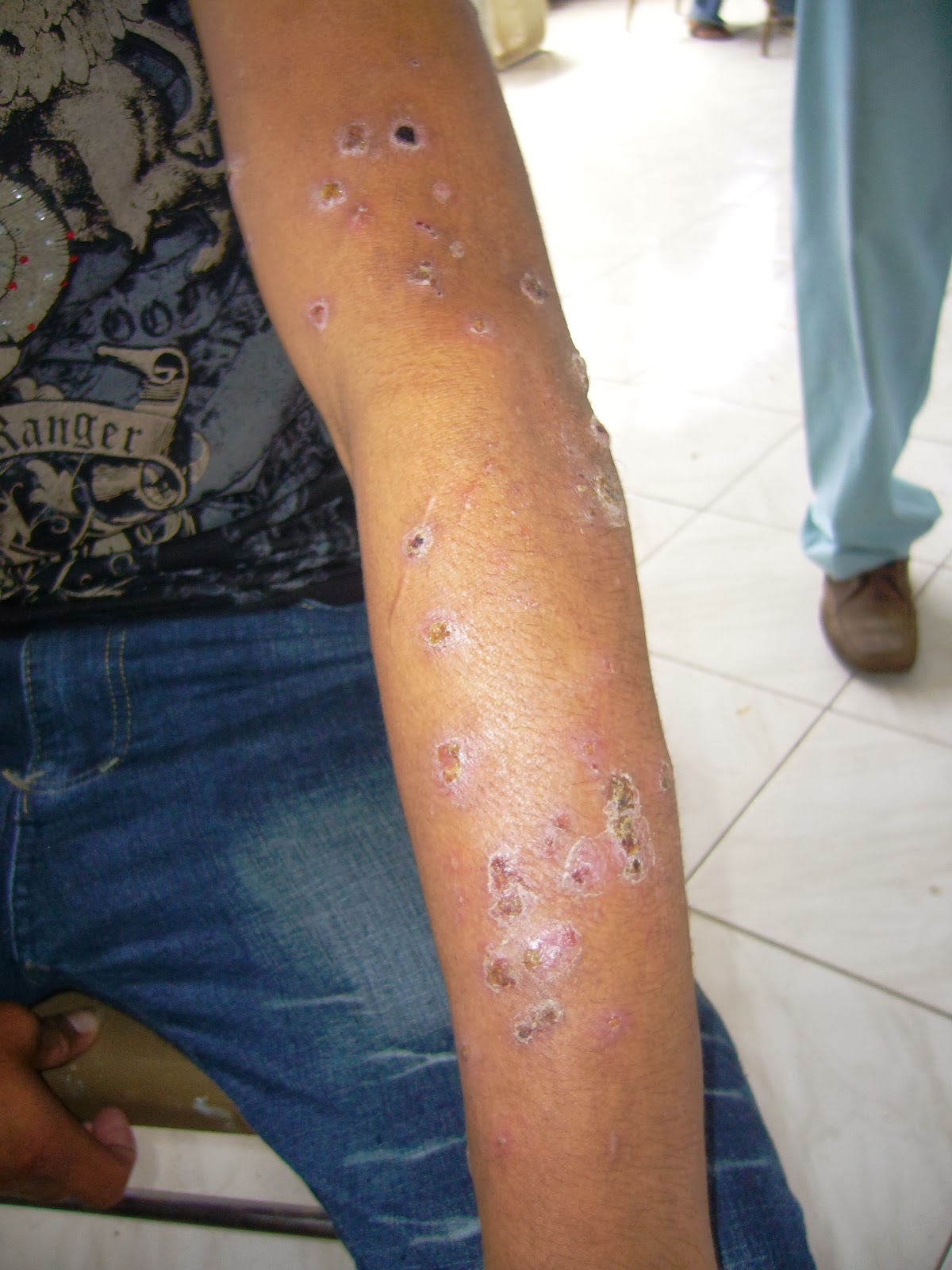 |
| Infected dermatitis |
This elderly woman came in with a non-healing, persisting ulcerative lesion slightly above her left eyebrow. From the appearance of it, we suspected squamous cell carcinoma, one of the skin cancers. We excised it. Here she is after the excision.
 |
| Skin closed after a squamous cell carcinoma excision |
I guess bathing is not a high priority when other problems are more pressing. This young man's ears were so packed with cerumen (ear wax) that it hurt him. We tried to remove it with a currette but it was painful and would not budge. Rather than damage his eardrum, we flushed his ears out.
 |
| getting ears flushed for cerumen impaction |
El Salvador Mission Trip 2012 - part 6 - Goofing off and having fun
Mission trips have their bloopers and bleepers. We did a lot of goofy and funny stuff and laughed a lot. We cried a lot too. Medical missions are emotional. One can feel overwhelmed, overjoyed, overcome with sorrow and frustation and discover things about oneself and one's companions on the trip. It bonds the group together as most shared adventures will.
You have to know Scott to know that he would pull a stunt like this for the camera. Okay, he did not really eat the bug and it was dead (we hope).
The children of El Salvador would win your heart, break your heart and make you want to love them all at the same time.
This little girl grabbed the stethoscope and wanted to examine everyone.
She told everyone the same thing: "You have hiccups!" When we asked her what we should do to be cured, she uttered real words of wisdom. She said "Don't eat too much!"
When I was finished examing this little one, she wanted to examine me. Who am I to turn down a free physical?
Here's Dr. Thao's daughter trying to get the ball away from an El Salvadoran player. Soccer in the street.
We had quite a few high school and college kids with us on the trip. It was wonderful to see them do what kids do -- play. Even with the barrier of language and culture, children magically know how to play and laugh together.
While we saw patients, our evangelism team would play soccer, skip rope, laugh or just love on the many children we saw in the street.
Soccer is a fun game. There is no equipment involved, except the ball. Well, not really. It is a very popular sport in El Salvador.
 |
| hmmm...good! |
 |
| now this tastes a LOT better! |
 |
| Okay, I'm ready. First patient....! |
This little girl grabbed the stethoscope and wanted to examine everyone.
 |
| Listening to heart of a childrens' pastor. Imagine that! |
She told everyone the same thing: "You have hiccups!" When we asked her what we should do to be cured, she uttered real words of wisdom. She said "Don't eat too much!"
 |
| Will I live, doctor? |
 |
| Does your ear hurt? |
 |
| It's MY turn to listen to YOUR heart! |
 |
| US versus El Salvador impromptu soccer match in the street |
 |
| Hey! Put me down! |
 |
| Yup! She loves me! |
 |
| Outside the church at Nueva Esperanza |
Subscribe to:
Posts (Atom)
